The Allure of Fascism (Vol. II), Part 10
In the final year of Trump’s first presidential term, the COVID-19 pandemic spread across the globe. The virus would go on to cause over seven million confirmed deaths worldwide by 2023’s end; researchers using excess death statistics would estimate the true number of deaths at the same point at 26 million.1 Anywhere between 6% and one third of people who contracted the virus suffered or continue to experience prolonged post-COVID symptoms.2 An untold volume of pain, grief and mourning haunts these figures. A profound helplessness, too, a sense of security gone forever.
COVID-19 was a major health catastrophe. But as Toby Green writes, “the mitigation strategies taken to combat it were catastrophic” in their own way. The lockdowns and associated policies may have been the best course of action for population survival: the lockdowns almost certainly saved lives, whatever their cost.3 The same policies, however, generated disastrous political, economic, social, and psychological effects: as Panagiotis Sotiris writes, “the social cost of prolonged unemployment and economic depression can be catastrophic, and in particular for those segments of society that are more vulnerable.”4 The political choices made during the COVID-19 crisis redefined our attachments to signifiers like freedom, democracy, authority, consent, health and death. They deepened, reformed, created and broke our investments in ideals and norms that defined and redefined collective life. A political trade-off was made during the pandemic. Security was prioritised above all else. One of the costs of that security, however, was political radicalisation. A rise in the potential for fascism.
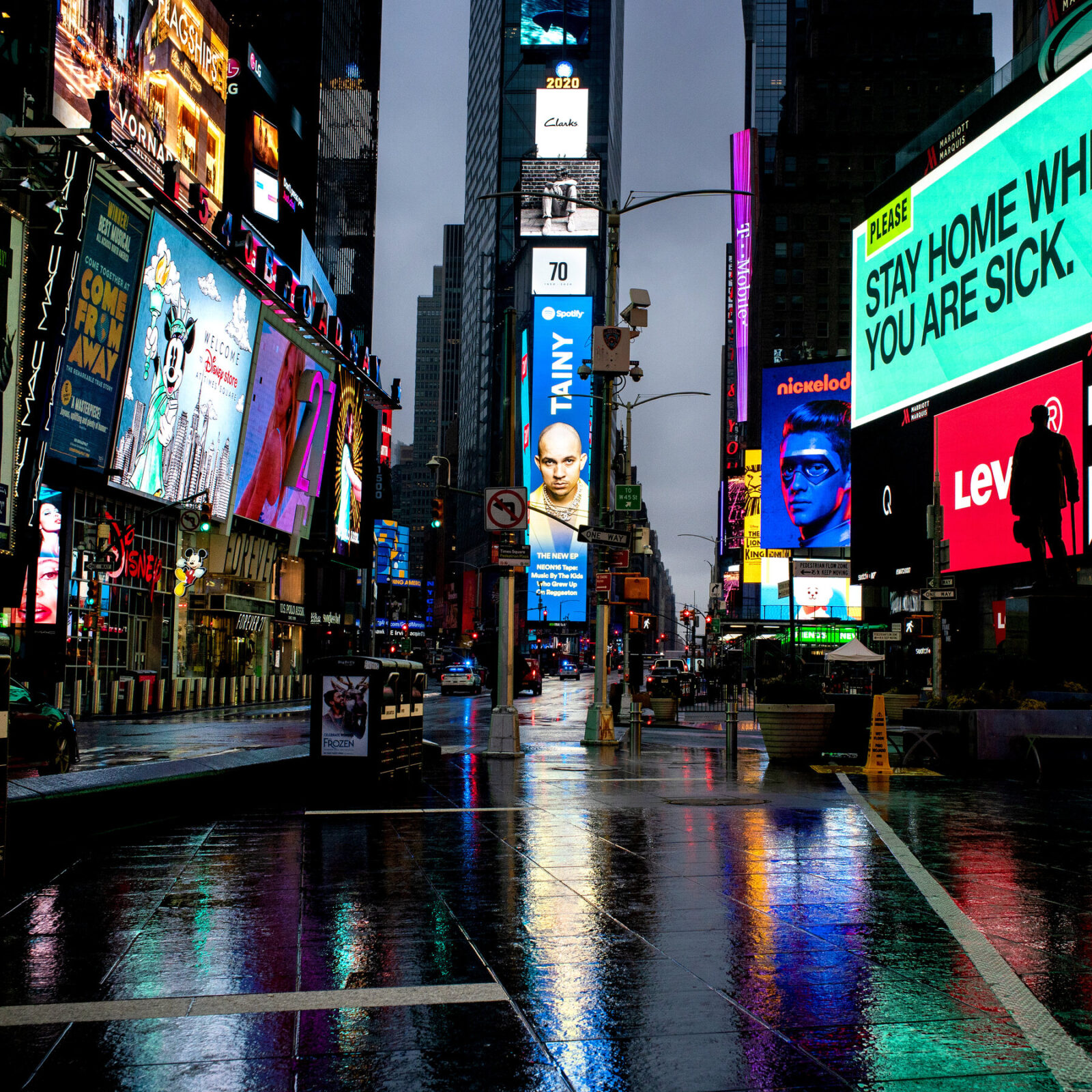
Like the virus itself, lockdown policies first appeared in Wuhan. On January 23rd, 2020, the city issued stay-at-home orders for its citizens. Those policies then spread across the world in the coming weeks. By early April, “more than 3.9 billion people in more than ninety countries had been placed in lockdown,” including over 300 million people in the US. That lockdowns became the “standard procedure in most countries around the world” is extraordinary: both the level of international political coordination and the policy itself were essentially unprecedented in modern history. As China’s WHO representative stated when Wuhan was first locked down, “the lockdown of 11 million people is unprecedented in public health history so it is certainly not a recommendation that the WHO has made.”5
Before 2020, there was no scientific consensus that lockdowns were even a useful strategy for addressing a pandemic, let alone the default option. Viral elimination strategies had even less support among experts than lockdowns. Most countries, then, did not have a public health policy that stated that mass lockdowns would be used in the event of a pandemic. When the COVID-19 pandemic began, most governments did not have an explicit electoral mandate to enact lockdown policies. Populations had not consented, through vote or otherwise, to the use of these policies. When doctors and public health officials suggested the use of lockdowns and governments followed, their actions were, by definition, coercive and authoritarian, secured not by popular approval but by expert opinion. Despite the lack of scientific consensus on its effectiveness, too, “general lockdown was presented as a sufficient solution or the only available solution.”6
“Technocracy is a failure of democracy,” wrote one author,7 and one of the first crises of the pandemic was therefore one of political legitimacy. Of course, there was “a strong moral imperative to protect those who were immunocompromised, elderly, or at heightened risk” during the pandemic, “even if it meant sacrificing some personal freedoms.”8 Equally, though, there may have been more “democratic” ways to protect the vulnerable and navigate the path to endemicity.9 Instead, liberal democracies chose to undemocratically suspend freedom en masse. At a stroke, these countries became illiberal and undemocratic technocracies, with radically expanded policing and state surveillance programmes. Inverting the ideals of liberal democracy, both radically and plainly, the government policies generated a “profound ambivalence towards the state” among the world population.10
At once, the lockdowns, the COVID-zero elimination policies, and vaccine mandates were a humane response to the viral threat, privileging human life and health above all else. They were recommended by scientists, too, who were more concerned with protecting vulnerable individuals than with economic activity or political popularity. While the decisions were justified with the technical language of the health professions, they nevertheless remained political decisions, saturated with value judgements about collective life, mutual responsibility, consent, and power. As Étienne Balibar said, “any strategy of collective protection, whether it is a question of closing borders, confinement, or tracing ‘populations at risk,’ is never harmless. The way in which a society sees itself ‘at war,’ even against a virus, is a matter of democracy.” “A pandemic is not merely or primarily a biological phenomenon,” writes Panagiotis Sotiris, “it is also a social process.”11 The health crisis, then, was also “an economic and social crisis and a conflict of values,” while the “virus is already mediated through the social response to it”—a fact that was often disavowed by the technocratic establishment, the media, and those who aligned with them.12
Economic crisis rapidly followed the lockdowns. Halting production and employment, the lockdowns forced hundreds of thousands of businesses to close; a precipitous fall in GDP, employment, demand, and supply all threatened to follow. In response, governments then enacted radical fiscal and monetary policies. Interest rates worldwide fell to their lowest recorded levels. Shocking volumes of quantitative easing soon followed, with the Federal Reserve alone supplying almost $5 trillion in liquidity in the two years before March 2022. Another $3.4 trillion in economic stimulus flowed from the US government in the pandemic’s first year.13 These policies prevented a complete collapse of the world economy. But combined with the lockdowns, they nevertheless caused their own economic devastation, especially for lower-income workers who could not work remotely.
“In 2020 alone,” writes Thomas Fazi, “workers around the world cumulatively lost US$3.7 trillion in earnings, an 8.3 percent decline.” At the same time, global billionaire wealth grew by US$4.4 trillion between 2020 and 2021, or 54%.14 This “massive upward transfer of wealth—the largest in modern history in the shortest space of time,” Fazi continues, cannot be understood “without taking into account the way in which the pandemic response dramatically altered the geography of global, and especially Western, capitalism.”15 One consequence, of course, was the explosion of Elon Musk’s private wealth. Worth $20 billion in 2018, Musk’s wealth exploded in the pandemic, reaching $280 billion in late 2021. Musk would use that wealth to buy Twitter and deploy it as a far-right “information weapon” to support Trump’s re-election in 2024.16 The political influence he bought would help make him a trillionaire by 2026.
Inequalities in private wealth and income grew even deeper because of government responses to the pandemic. For a select few sectors, corporate earnings also exploded. Silicon Valley tech firms and pharmaceutical companies earned enormous returns because of pandemic policies. Companies like Google, Amazon, Microsoft and Zoom capitalised on the lockdowns to offer digital solutions for all the ordinary activities—shopping, entertainment, and education—people could not do because of lockdowns. Algorithmic marketing revenues soared, too, as other businesses re-routed their advertising spending away from physical locations.17 Pharmaceutical companies who sought to develop vaccines received enormous government grants; those like Pfizer and Moderna who succeeded later made tens of billions of dollars in private profits selling patented vaccines at inflated prices to the very governments who funded their research. Together, “Pfizer, BioNTech and Moderna made combined profits of around US$45 billion in 2021 alone.”18 Vaccine mandate and passport policies, using coercion to encourage people to receive these vaccines, obviously contributed to the exorbitant profits. Tech companies that worked with the government to deepen the health surveillance apparatus also made incredible amounts of money. The “coronopticon,” as one author memorably described it, was both a health measure and a lucrative opportunity.19
The government response to COVID-19 ultimately established an incredibly powerful tech-pharmaco-industrial complex. As Thomas Fazi notes, “the companies selling the vaccine (Pfizer, Johnson & Johnson), the media outlets shaping the mainstream vaccine narrative, and the social media platforms enforcing that narrative are, to a large degree, owned and controlled by the same two funds: BlackRock and Vanguard which, incidentally, are raking in billions from the vaccines.”20 Writing in late 2021, Toby Green and Thomas Fazi therefore noted that the pandemic brought “an unparalleled strengthening of transnational corporate behemoths and their oligarchs at the expense of workers and local businesses.”21
While billionaires and corporations profited from the lockdowns, poorer people worldwide suffered. For members of the “white-collar workforce” who were “encouraged to work from home on full pay,” the lockdowns offered protection without disrupting their livelihood. Some of them even “welcomed lockdown as a ‘new lifestyle’ featuring no commuting, working from home, more time spent with family, and increased savings.”22 But “[o]thers, the vast majority across the world,” Mike Haynes notes, “had to go out to work.”23 Though COVID-19 policies were premised on “‘protecting’ and ‘caring’ for the ‘vulnerable,’” then, “the measures meant a destruction of the livelihoods of vulnerable populations.”24 Unable to work remotely, poorer people—frequently, migrants and racial minorities—either lost their jobs or worked in unsafe conditions that wealthier people did not have to endure. As such, “the burden of COVID-19 restrictions and the pandemic itself fell most heavily on the poor, both in the West and globally.”25 The “poorest in society were about twice as likely as the wealthiest to contract the virus, be hospitalised, and die, thanks to pre-existing health and social inequalities.” The lockdowns therefore “compounded their misery, having ‘a disproportionate impact’ on the poor, young, ethnic minorities, and women.”26 Though governments sought to protect their populations with their measures, they ultimately protected white, higher-income people more than anyone else.
The social effects of the lockdowns were no less extreme. Confining people to their houses for months on end, the lockdown policies abruptly halted ordinary social life: “civil society as we knew it was eroded, within a matter of weeks.”27 With the pandemic raging beyond their doors and isolated inside their homes, people felt lonely, fearful, and paranoid. They became afraid and suspicious, terrified that others would spread the virus, bringing sickness and death, while the government and police used coercion and violence against civilians “in the service of public health.”28 Quietly, people worried that others would cause an extension of the lockdown policies if they did not adhere to the restrictions. Some of them became furiously angry at those who failed to obey, blaming them for the continued suspension of liberty instead of the governments who imposed those policies. The social fabric, the medium of viral transmission, became an object of fear. Relationality itself became suspect. What resulted from the lockdowns was a radical atomisation of society, a disintegration of sociality as such. Or as Mike Haynes wrote, “It is difficult to imagine a scale of human estrangement in human history comparable to that of the countries which locked down.”29
Subjected to these health, political, economic, and social crises, psychic distress soared among world populations during the pandemic. The “COVID pandemic,” one study argued, “constitutes an important environmental stressor by means of the adverse psychological effects of social distancing, concerns about unemployment, fear of contamination, and grief about the lost ones.”30 A WHO report concluded that, in the pandemic’s first year, the global prevalence of anxiety and depression increased by 25%.31 In the US, the proportion of the population reporting symptoms of the same illnesses rose from a pre-pandemic prevalence of 10.8% of the population to 37.6% during the first year of the pandemic. Those rates remained elevated well after the lockdowns ended, too, remaining at 29.5% in the year before March 2024.32 This mental distress led to a rise in suicidal behaviour. Suicidal ideation and suicide attempts climbed globally during the pandemic, though without a corresponding rise in overall suicide rates.33 A June 2020 survey of US individuals found that over 10% of them had “seriously considered suicide in the 30 days before completing the survey.”34 The distress also increased the prevalence of psychotic symptoms.35 One study found that more than one in seven people among the general population self-reported psychotic experiences during the pandemic,36 while another found that the proportion of patients presenting to mental health services with psychotic symptoms had significantly increased.37 Other studies found that paranoid delusions and symptoms rose during lockdown too.38
Some of these studies have a tendency to attribute the psychic distress to the pandemic itself. Notably, they do not always differentiate between the stress caused by illness and fear of the virus and that caused by the government responses to the pandemic. Part of the distress, of course, was produced by the viral threat—the deaths and illnesses it caused gave people a rational fear of being infected. The lockdowns and other pandemic policies, however, also contributed significantly to the explosion of psychic illness and distress. As one study found, the use of mental health facilities in the US “increased by 18% in regions with a lockdown compared to 1% decline in regions without a lockdown.”39
Cumulatively, the effects of lockdowns themselves contributed to excess mortality, just like the virus. As one writer noted, a “prolonged economic recession, with increased unemployment, mass deterioration of social conditions, and subsequent waves of austerity combined with labour-market liberalisation and precariousness, will in the medium and long term mean extra deaths, even though for those deaths there will be no daily bulletins.”40 Like 9/11 and the GFC, the COVID-19 crisis was an ontological crisis, shaking the world at every level of its being. Creating profound uncertainty and causing socioeconomic destruction and upheaval, the psychopolitical effects of the crisis can hardly be overstated. At the pandemic’s start, Slavoj Žižek argued that whatever happened, the crisis would ultimately have highly significant consequences. “The only thing that is clear,” he wrote in March 2020, “is that the virus will shatter the very foundations of our lives, causing not only an immense amount of suffering but also economic havoc conceivably worse than the Great Recession. There is no return to normal, the new ‘normal’ will have to be constructed on the ruins of our old lives, or we will find ourselves in a new barbarism whose signs are already clearly discernible.”41
Even though lockdowns were arguably the right decision, the pandemic’s consequences for global politics can only be understood if we acknowledge their cost.
Endnotes
“Thinking Beyond the Lockdown: On the Possibility of a Democratic Biopolitics,” p.16.
See The Covid Consensus.
“Thinking Beyond the Lockdown: On the Possibility of a Democratic Biopolitics,” p.5.
“The rise of the COVID-19 industrial complex,” in COVID-19 and the Left, p.68, and
“The rise of the COVID-19 industrial complex,” in COVID-19 and the Left, p.68, and
“The rise of the COVID-19 industrial complex,” in COVID-19 and the Left, p.69.
“The rise of the COVID-19 industrial complex,” in COVID-19 and the Left, p.70.
“The rise of the COVID-19 industrial complex,” in COVID-19 and the Left, p.75.
“From the void to COVID,” in COVID-19 and the Left, p.27.
“Introduction,” in COVID-19 and the Left, p.4.
“From the void to COVID,” in COVID-19 and the Left, p.23.
“From the void to COVID,” in COVID-19 and the Left, p.23.
“Introduction,” in COVID-19 and the Left, p.2.
“Introduction,” in COVID-19 and the Left, p.6.
“Thinking Beyond the Lockdown: On the Possibility of a Democratic Biopolitics,” p.16.
Pandemic!, p.3